
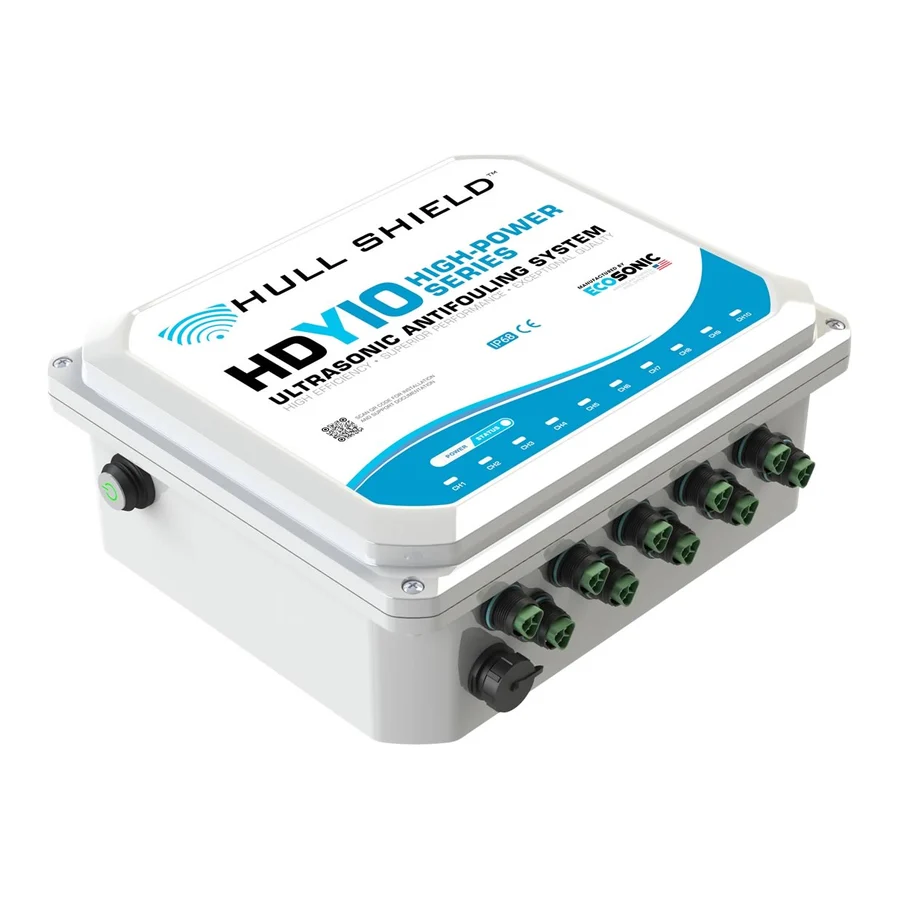
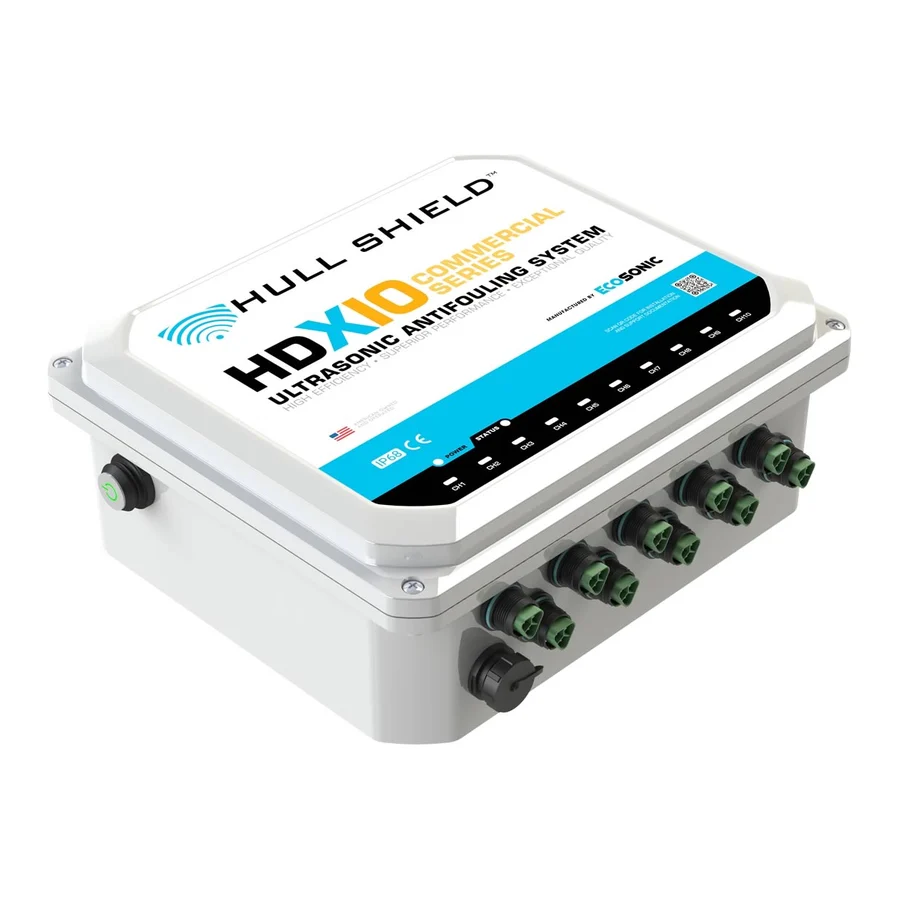
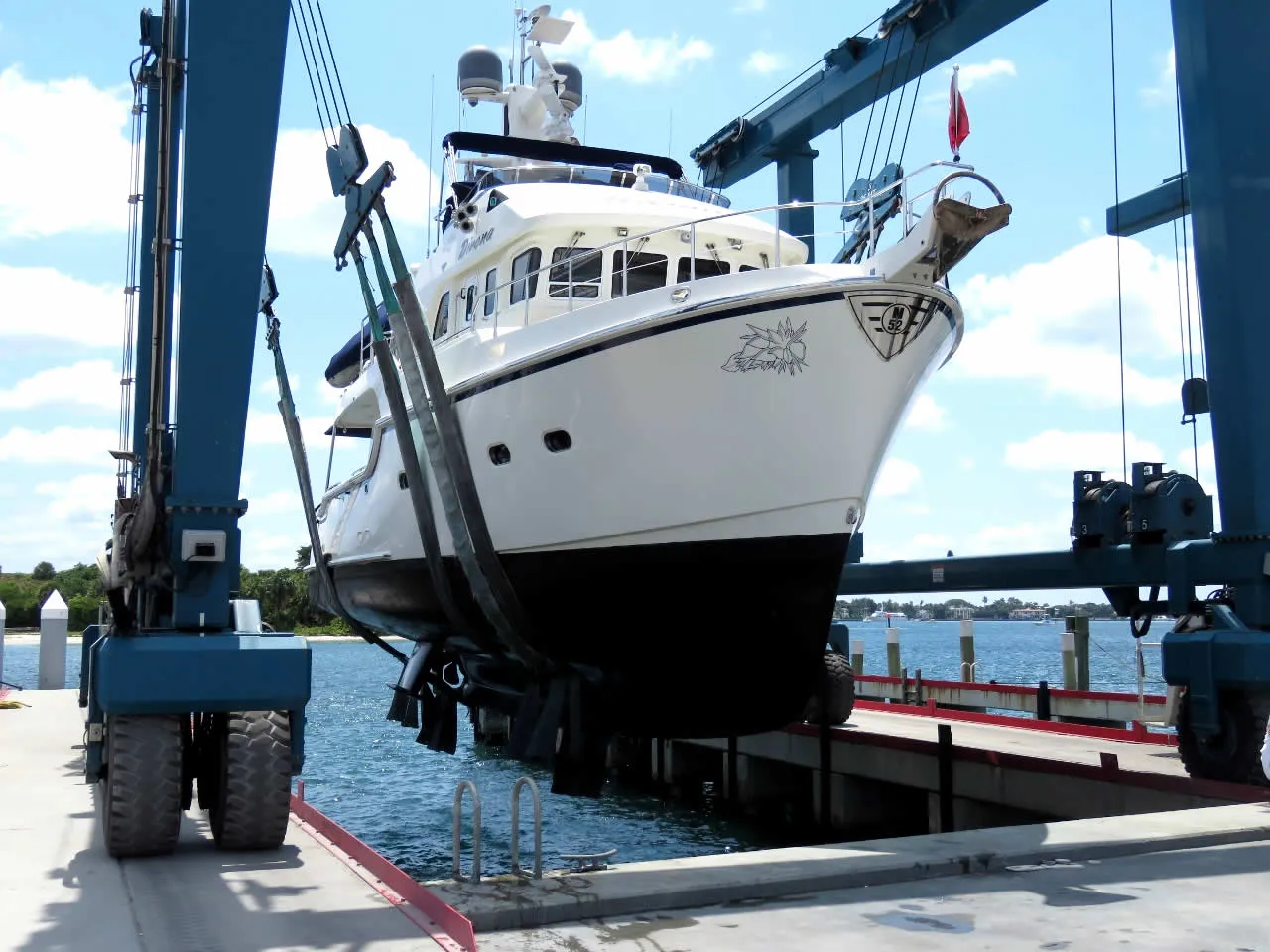
The right number of transducers depends on three things: the wetted hull area, the propulsion system and the parts isolated from the hull.
1. Hull area
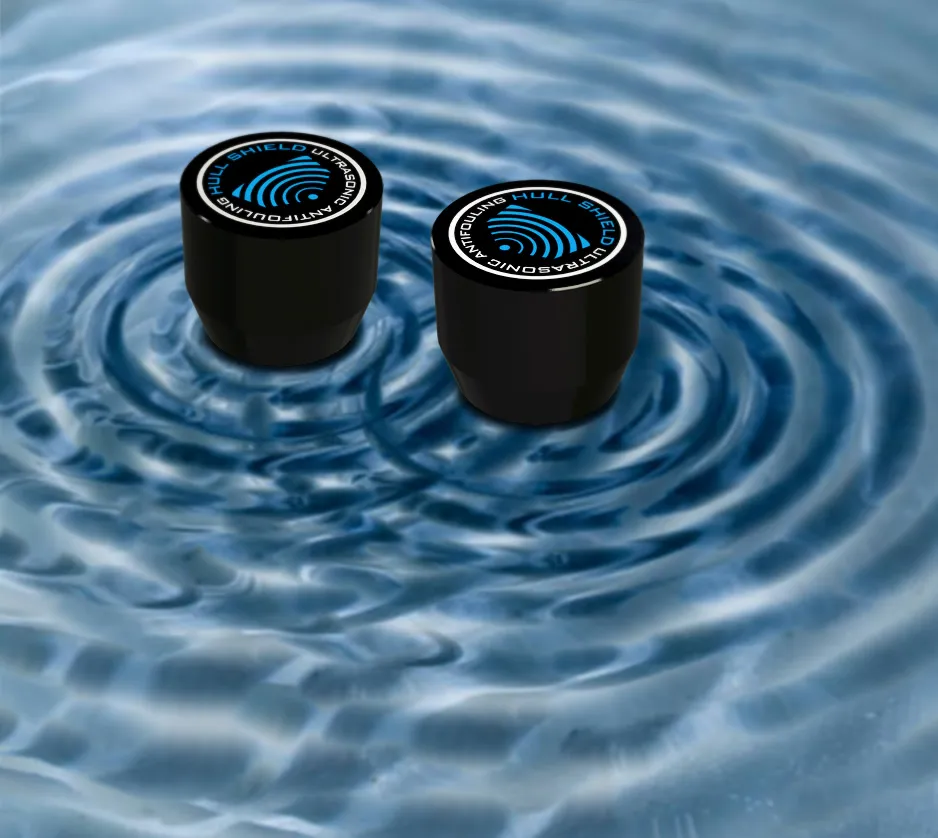
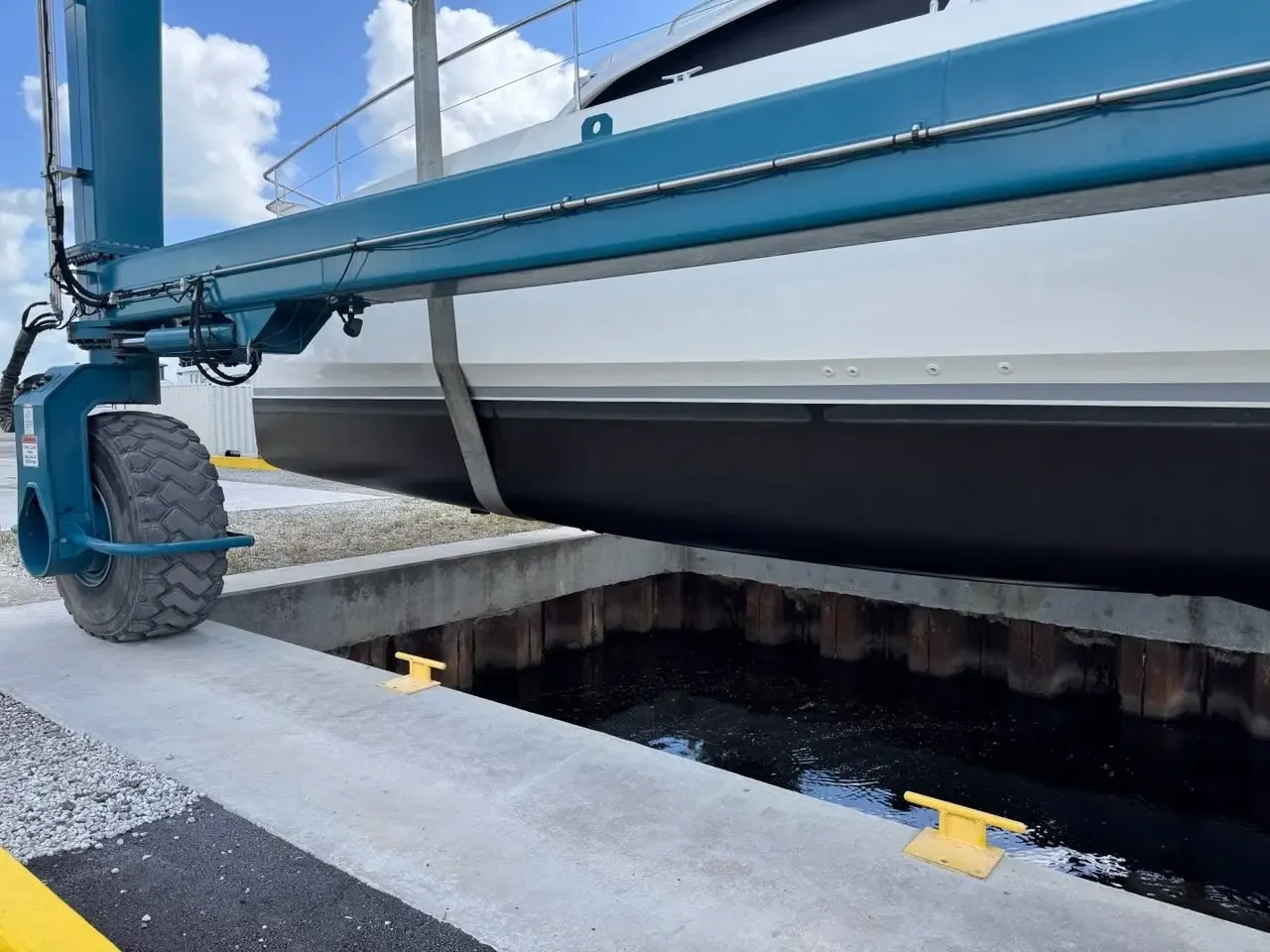
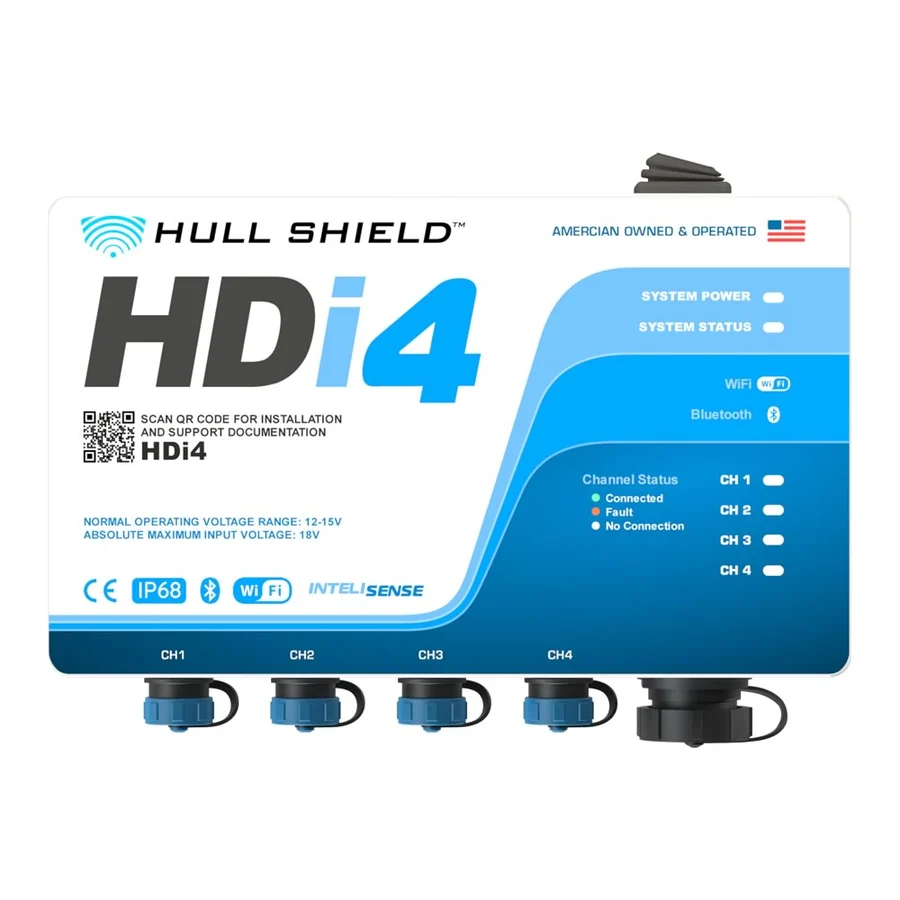
A practical formula for the approximate wetted area: (2 × draft + beam) × length. One HDi transducer protects about 200 sq ft (18.6 m²) of hull. HDY transducers cover more thanks to their higher power, so large yachts need fewer of them.
2. Drives and rudders
Shafts, props, rudders, pods and stabilizers are isolated from the hull by mounts, gaskets and seals. Ultrasound can’t cross that isolation, so each independent part gets a transducer. On boats over 55 ft, large shafts and pods can use two transducers running INTELI-BOOST™.
3. Seawater systems
Sea chests, strainers, pipework and A/C circuits can also be protected with dedicated transducers, usually via small add-on controllers (2–4 channels) on HDY and HDX systems.
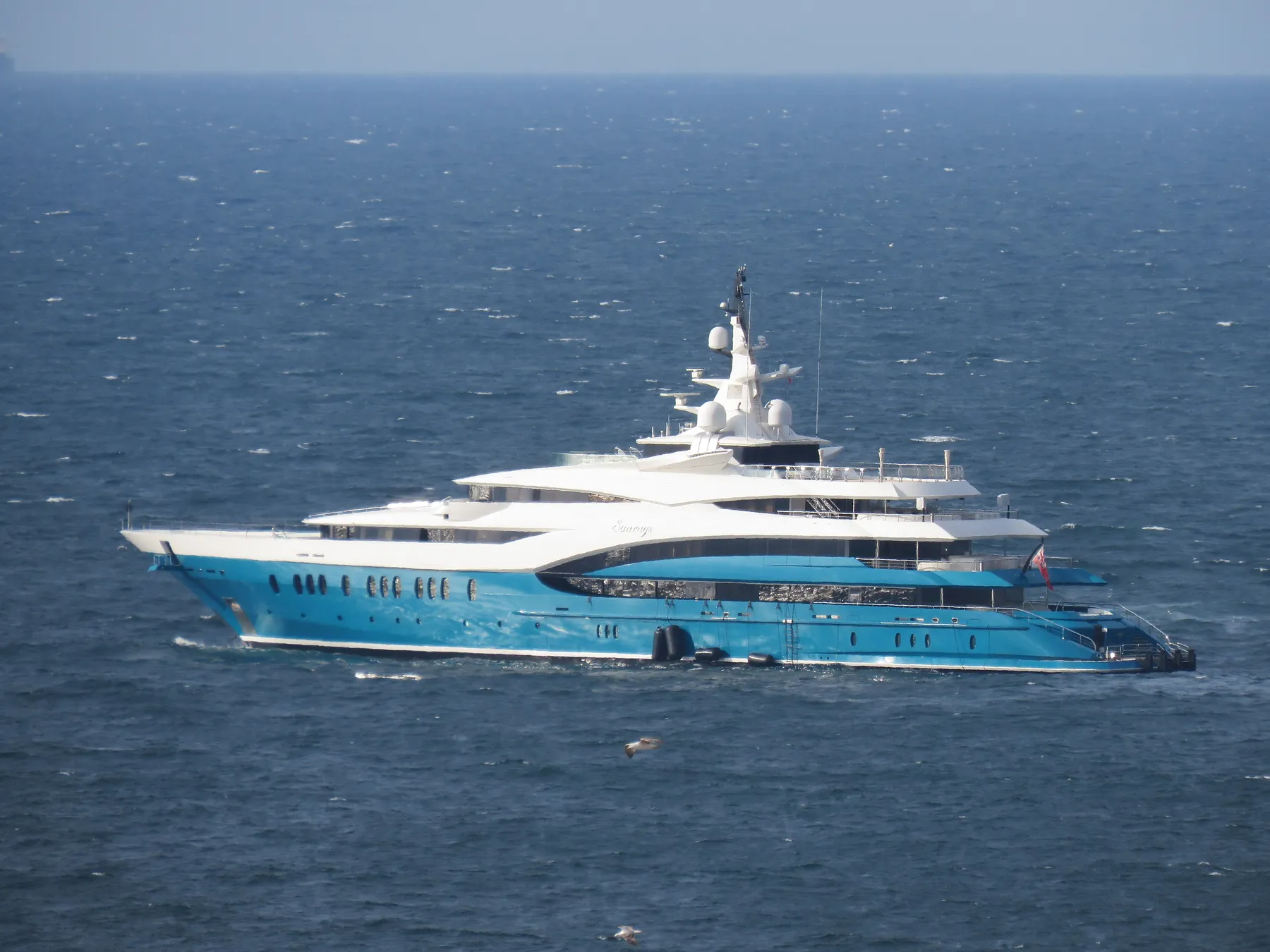
Typical HDY configurations by yacht class
- 65–80 ft: about 10 transducers, 1 × HDY-10
- 80–100 ft: 14–16 transducers, HDY-10 + HDY-4/6
- 100–140 ft: 20–26 transducers, 2 × HDY-10 + HDY-4/6
- 140 ft and up: 28+ transducers, 3 × HDY-10 and up
See a starting layout for your own boat in the sizing tool; the final plan comes from a survey and drawings.